overview: experiential learning
We believe it is fundamental to incorporate experiential learning into undergraduate courses in order to reach and retain students with diverse backgrounds, learning styles, and interests and broaden participation in the sciences.
We incorporate active and experiential learning approaches in traditional classroom settings to break away from lectures and promote student interaction, group discussion, and critical thinking. We have also developed authentic research-based course experiences for undergraduates (our immersion course, described below), and we are investigating how these opportunities influence students’ relationship with science and the scientific community.
our “microbial life in the oceans” immersion course
The Semester of Immersion consists of three consecutive, five-week-long sessions, wherein students enroll in one course per session for a total of three immersion courses during the semester. Instead of spending the semester taking a traditional 12-credit load with courses meeting two to three times per week, the Immersion format consists of courses that meet daily over five weeks, giving students time and flexibility to get more deeply involved in a subject.
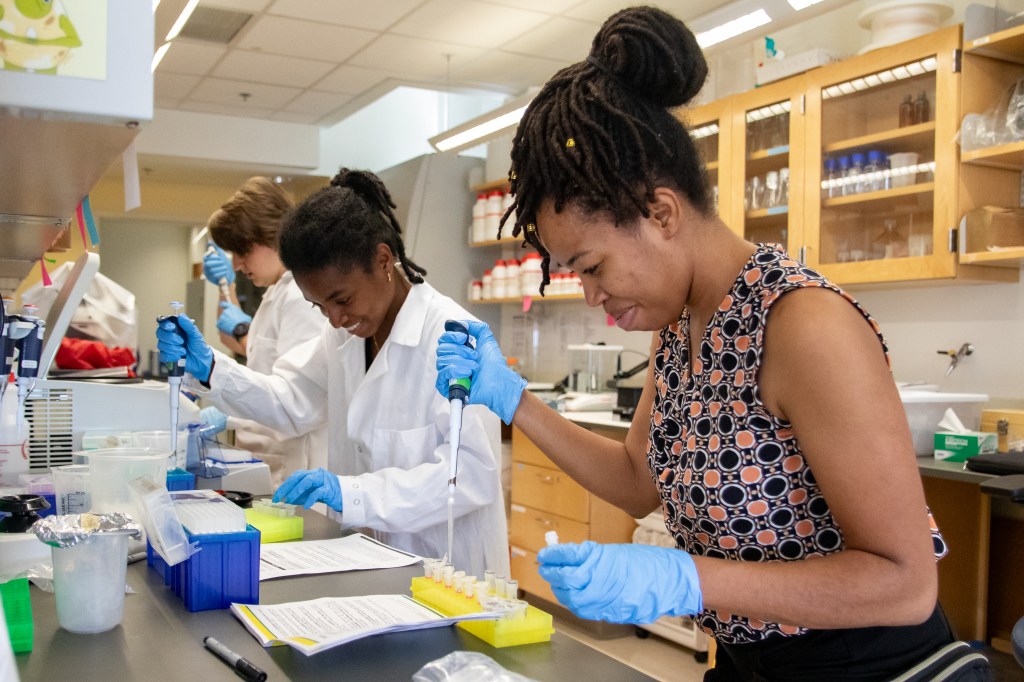
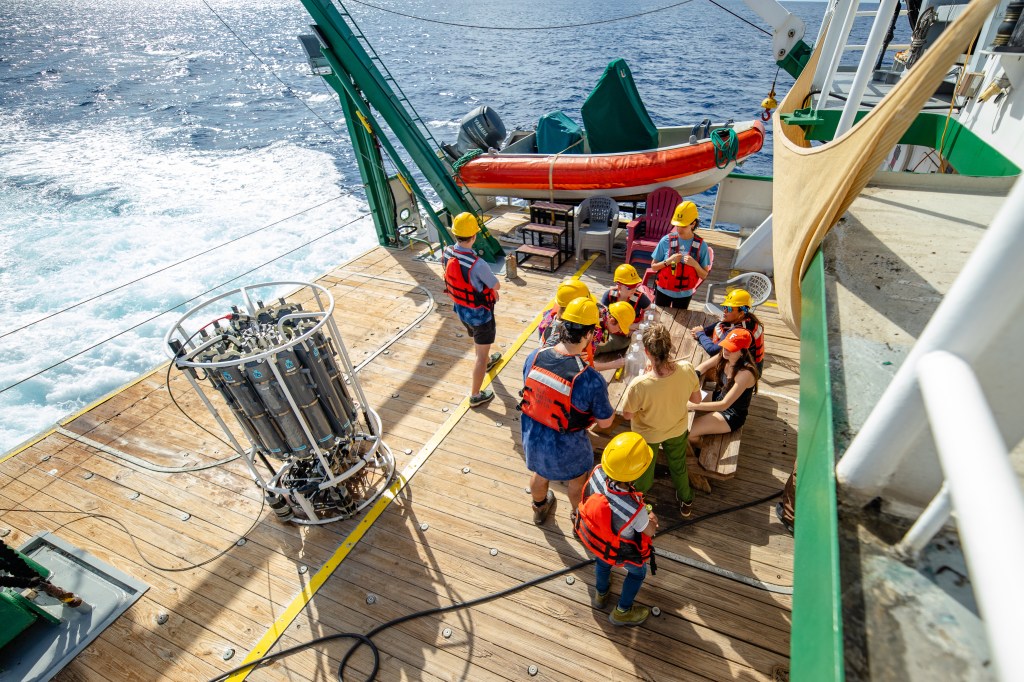
In our experiential education course, Microbial Life in the Oceans, we integrate undergraduate training in multiple facets of research, from planning and conducting experiments, to analyzing and interpreting data, to communicating research findings. Students gain research exposure in a variety of microbial oceanography topics that include marine biogeochemistry (e.g., primary production, organic matter, nutrients), marine microbe classification (e.g., microscopy, DNA sequencing), and metabolite identification (e.g., liquid chromatography). Students take part in an authentic research expedition at sea where they learn core oceanographic sampling techniques, and they perform wet bench techniques and data analysis at UF. Students also carry out independent projects by analyzing data they acquire at sea.
additional UF marine sciences courses instructed by Dr. Durham
Biological Oceanography (undergraduate level): We cover the distributions and abundances of marine organisms, how marine organisms interact with the physical and chemical environment of the ocean, and the research techniques used to quantify biological processes. We also explore impacts of human perturbations and climate change on ocean ecosystems and their inhabitants. Beyond classroom lectures, students lead discussions of scientific articles. Students also develop research projects on a topic-of-interest, submitting various components of the project during the semester to get both instructor and peer feedback. This culminates with each student presenting their project at the end of the semester and submitting a final synthesis paper.
Microbial Oceanography (graduate + advanced undergraduate level): We cover microbial processes in the oceans with an emphasis on how marine microbes influence biogeochemical, ecological, and climate-related dynamics. We focus on field-based ocean observations and measurements used to quantify microbial populations and metabolisms. The course consists of a combination of lectures, student-led discussions of primary literature, and hands-on data analysis. Students learn to analyze molecular and chemical data collected from previous ocean sampling campaigns, with the option for students to lead their own research projects and for the collective group to produce preliminary results for a student-led, co-authored manuscript.
Are you an undergraduate interested in research? Check out these programs at UF
- UF Research Excellence Program for Undergraduates (REPU) that recognizes UF students who have prepared for, conducted, and disseminated their research.
- CLAS University Scholars Program that provides support for CLAS students to undertake research with a CLAS faculty member.
- University Scholars Program that provides support for students to undertake a full research project, under the guidance of a faculty member.
 DURHAM LAB